 by
by For years, Search Engine Optimization was treated as a technical discipline: adjust title tags, refine keyword density, build backlinks, and rankings would follow. A decade ago, that model often worked. Visibility meant traffic, and traffic was considered success.
That definition has quietly expired.
Modern search ecosystems including AI related search results do not reward isolated optimization. They reward relevance, consistency, and credibility across an entire digital presence. Holistic SEO emerges from this shift. It does not replace traditional optimization; it absorbs it and expands it into a broader operational philosophy.
Holistic SEO is not about improving a page. It is about aligning an organization.
Beyond the Page
A holistic SEO model operates on a simple premise: search visibility reflects overall brand quality, not only technical compliance. On Page Optimization remains important, but it no longer defines the SEO game. Search performance now reflects user satisfaction, brand recognition, engagement signals, and cross the website’s consistency.
Search engines including AI results evaluate context, because users do the same.
If a website promises expertise in search results but presents confusing design, weak messaging, or inconsistent social communication, trust declines. Rankings eventually follow. In this environment, SEO cannot exist as a separate department focused solely on traffic generation. It becomes part of marketing strategy and ultimately, part of the company’s strategy.
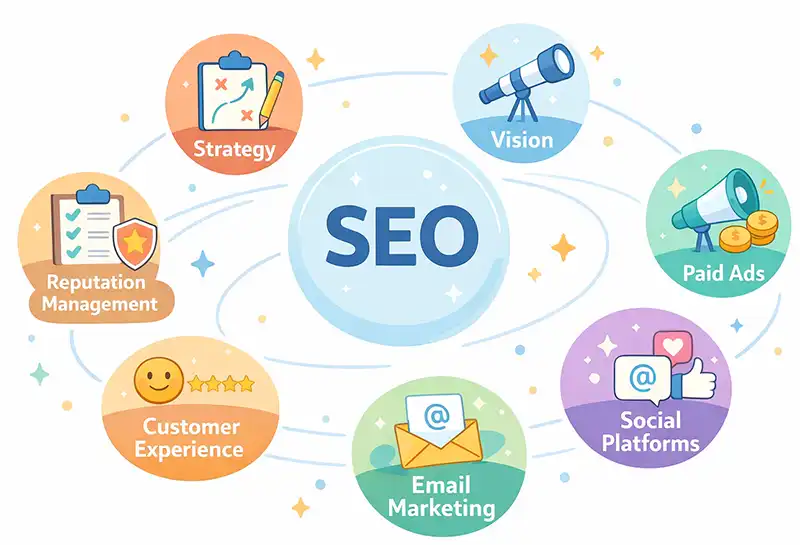
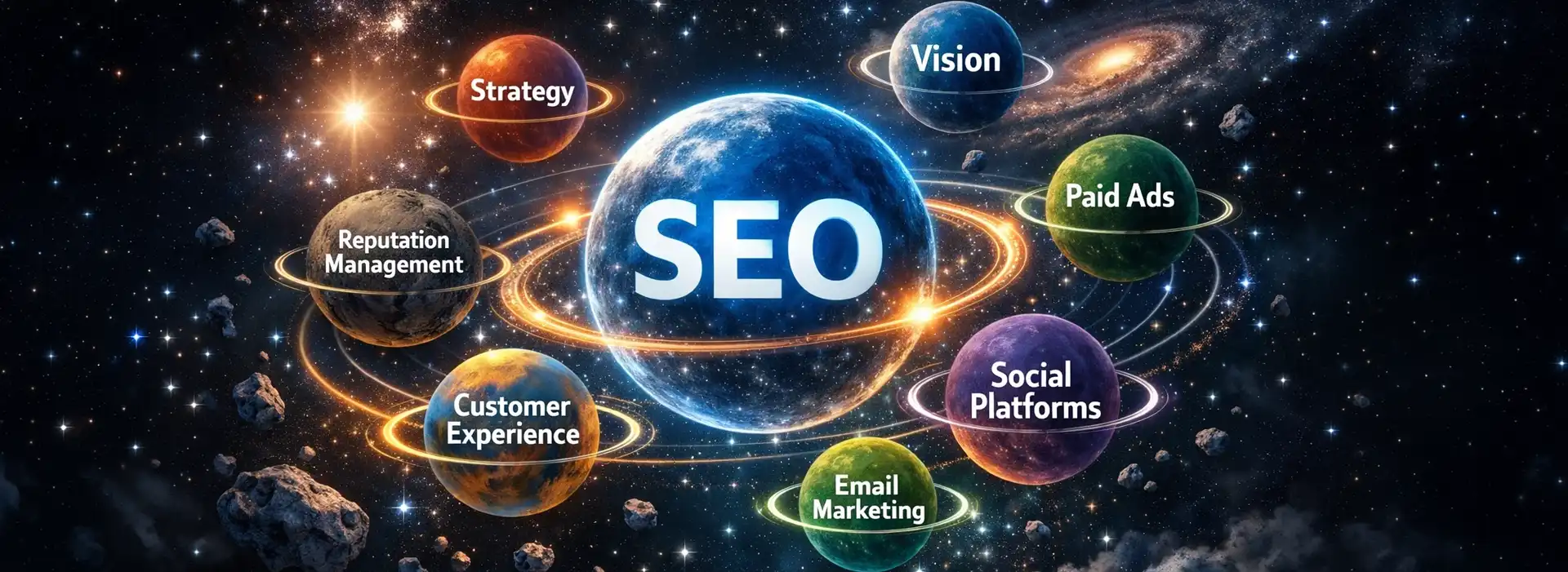
Holistic SEO integrates with every channel that influences perception:
- Email Marketing
- Paid Advertising
- Social Platforms
- Content Production
- customer experience
- Reputation Management
Traffic alone is no longer a success metric. A campaign that drives visitors but damages brand credibility or fails to convert undermines the organization’s goals. Holistic SEO therefore expands the objective from visibility to business impact: branding, reputation, and revenue.
From Traffic to Value
A website visit is only a beginning. Companies do not invest in optimization for traffic; they invest to create outcomes. Conversion is the central measure, and conversion depends on expectation fulfillment.
This requirement changes the SEO workflow.
SEO experts in 2026 must collaborate with design and development teams. Page structure, navigation clarity, load speed, and visual hierarchy directly affect performance in search because they affect behavior after the click. Call to action (CTA) placement becomes part of SEO, not merely marketing design.
In a holistic model, optimization answers a broader question:
Does the site deliver what the search result promises?
When expectation and experience align, engagement rises. When engagement rises, search engines interpret satisfaction signals. Conversion improvement and ranking improvement become the same task rather than separate initiatives.
Content as Authority, Not Inventory
Content production has long been connected to keyword research in the past. The traditional approach created material to capture queries. The holistic approach creates material to resolve needs.
Keywords still guide discovery, but relevance and usefulness determine success. High quality content accomplishes several goals simultaneously:
- Answers user questions
- Reinforces brand expertise
- Supports social distribution
- Generates engagement signals
- Drives conversion pathways
Low value content may generate impressions but rarely generates trust. Search engines and AI results increasingly evaluate depth, structure, and contextual authority. A well written article that genuinely helps a reader performs better over time than dozens of thin pages targeting slight keyword variations.
Holistic SEO therefore requires editorial discipline. SEO Strategists must ensure that every piece of content serves both a user need and a business purpose.
The goal in 2026 is credibility.
Analytics as Behavioral Intelligence
Modern optimization depends on interpretation rather than raw metrics. Page views, impressions, and click through rates provide signals, but they do not explain intent. Holistic SEO relies on deeper analysis of the customer journey.
Patterns matter:
- Where do visitors hesitate?
- Which topics lead to deeper exploration?
- Which entry points lead to conversion?
- Which content generates repeat visits?
By understanding and studying these pathways, SEO Experts can recommend new sections, refine messaging, and shape product presentation. Analytics becomes a design tool and a strategy guide. Instead of measuring performance after decisions are made, data informs decisions before implementation.
The role evolves from technician to behavioral analyst.
Channel Harmonization
Search engines do not operate in isolation from social platforms. Users encounter brands across multiple touchpoints before making decisions. Consistency across these encounters strengthens credibility and increases conversion probability.
Social platforms are content environments. They reward relevance and engagement in ways similar to search engines. Because of this similarity, SEO and social media strategies converge naturally.
Holistic SEO coordinates cross distribution:
- Shared topics across blog and social channels
- Unified messaging and tone
- iIterlinked assets
- Image and visual strategy alignment
- Target audience matching
Each channel supports the others. A blog post informs a social discussion. Social engagement strengthens brand recognition. Brand recognition improves click behavior in search results.
Organizational Implications
Holistic SEO changes internal workflows. Departments that once operated independently now share responsibility for performance. Developers affect rankings. Designers affect engagement. Content teams affect reputation. Marketing teams affect discoverability.
The SEO role shifts from executor to coordinator. Instead of adjusting pages after launch, the specialist participates in planning stages: product rollout, campaign structure, and messaging frameworks.
The SEO expert stops asking, How do we rank?
Instead they start asking, How do I serve?
Ranking becomes the consequence of alignment rather than the objective of manipulation.
The Strategic Outcome
Holistic SEO recognizes a simple truth: search engines and AI results attempt to model human judgment. They evaluate trust, relevance, and satisfaction. Organizations that mirror these priorities naturally perform better.
When a company aligns messaging, experience, content, and communication across all channels, optimization stops being a technical tactic. It becomes operational coherence.
- Traffic follows clarity.
- Conversion follows trust.
- Visibility follows value.
Holistic SEO is therefore not an advanced technique within search marketing. It is the evolution of marketing itself within a search driven world.